

北京市朝阳区乐成学校|与哥大校友,盘点乐成数学学习之路 | Journey Through BCIS
美国数学思维挑战赛即将拉开帷幕,乐成作为本校学生的专属考点,吸引了又一批热爱数学的学生为此摩拳擦掌,兴奋不已。
这一奖项也是22届校友Chris当年在乐成就读期间斩获的诸多数学奖项之一,目前Chris正就读于哥伦比亚大学数学专业,并计划攻读AI方向的PhD。回顾乐成数学学习之路,我们翻开了他曾经的数学论文和CAS项目,并由此提出了诸多有趣的问题:
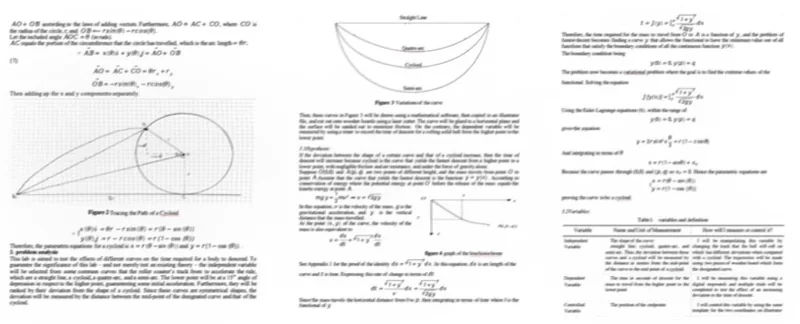
在Chris的一篇毕业论文中,他从过山车如何创造更刺激的体验出发, 探讨最速落径的斜率,以最大限度地减少在两个不同点之间行驶所需的时间。而他的另一篇论文则是《用泰勒级数探索经典物理和相对论中动能方程的偏差》,其中运用到了微积分方面的知识。
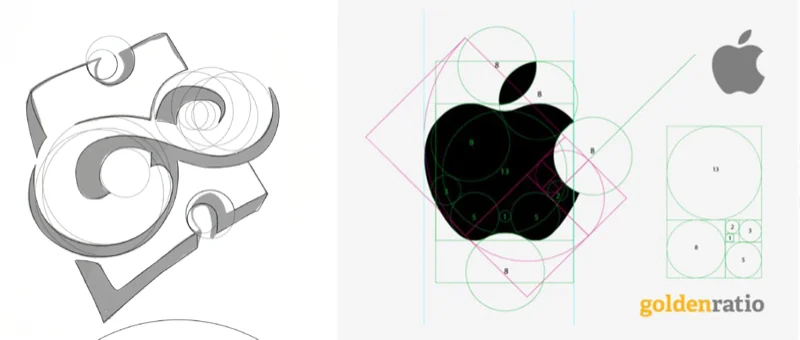
除此之外,在CAS中,Chris还将数学与设计创意相结合,创造性地运用分形几何、斐波那契数列和黄金比例等数学原理,分析Logo设计的底层逻辑。
所有IB DP文凭项目学生必须在六大学科组中每组各选一门课程进行学习,在乐成,Chris在IB文凭课程中学习了数学(高级水平),他回顾道:“IB文凭课程中的数学课程涵盖的内容比AP数学要多得多。我们在高中涉猎到的不同类型的数学将会更好地为学生们在之后深入某个特定领域做好准备。这也为我们打好了基础,让我们向大学数学学习过渡得更加顺畅。”
乐成在DP数学中提供了分析与方法高级水平和标准水平的课程选择。曾在传统体系和乐成中都有过就读体验的Yuanna老师分享道,“与传统模式下的数学相比,乐成的学生最大的特点,是他们知道自己解决一个问题要用到什么样的知识体系——无论是微积分、统计学、还是解析几何,并且知道如何去寻求老师的支持,到哪里去找资源。他们把数学看做是自己通向物理、经济、信息技术等其他学科科目的工具,而不是目标,不会为了计算而计算。” 除此之外,从PYP、MYP一路而来的探究思维和论文写作能力,也让数学里严谨的论述在DP阶段得到了进一步的发展。
MYP阶段对于数学学习有以下四个评估标准:知识理解(Knowledge and understanding), 探索方式(Investigating patterns),数学沟通(Communicating in mathematics) 和真实情境中数学应用(Applying mathematics in a real life context)。中学部数学组长Patrick分享道,乐成MYP数学涵盖了广泛的数学概念和技能,以此来逐步建立学生的数学知识和理解,为DP数学课程提供坚实的基础。
MYP课程侧重于培养学生的批判性思维和问题解决能力,采用探究式学习,鼓励学生通过提出问题和调查来探索数学概念。他们可能会被提出一个现实生活中的问题,并要求运用他们的数学知识来找到解决方案。例如,最近九年级学生正在探索几何(三角学)的概念,他们必须运用这些知识来设计学校内不同区域的坡道,以帮助轮椅使用者更容易进出。学生们以小组或成对的方式共同解决数学问题或完成项目。这种方法培养了沟通和团队合作的能力,也培养了向他人解释数学概念的能力。
老师们根据个体的能力和学习风格提供不同水平的支持、资源和任务,提供差异化指导。学生们可以选择符合他们兴趣和优势的不同数学活动。选择自己感兴趣的领域,并采用不同的方式呈现他们的作品。在十年级数学项目单元中,有同学就从电影《流浪地球》的兴趣出发,选择关于天体引力的洛希极限作为自己的选题。
老师们也会将技术工具和资源融入到数学学习中,让数学变得可视化且有互动性的同时,培养未来社会所需的数字素养。通过持续的评估,如小测验、讨论或观察,不断监测学生的进展,及时反馈,并帮助识别学生可能需要额外支持的领域。
在概念驱动的教学中,学生习得的是种思维方式和学习方法,强调将学习重点放在对宽泛原理的理解上,并学会用这些原理来总结和分类零碎的知识点。在数学学科中,传统的教学方式可能注重对具体公式或算法的记忆和运用,而IB概念式主导的学习则强调对数学概念的理解和运用。小学部主班老师John分享道:“小学部的数学学习正是基于真正的数学家如何工作——提出问题然后解决问题。基于概念的方法需要学生运用批判性思维和模式提炼,在任务之间建立联系,以找到答案。” 例如,在小数、百分比和分数之间建立联系并得出结论,判断值的变化、思考它们的各种用途,将这些概念应用于活动、项目、日常交流中,解决各种问题。
围绕IB PYP的五个关键词:知识、概念、技巧、态度、行动,小学的数学学习首先希望建立起一种态度——数学是令人愉快并易于掌握的学科。学生们面对的不是成绩和不断的测试,而是通过建立通过合作、开放式任务和讨论来强化对概念的认知。从一个问题出发,进行不同的尝试,也有可能是在试错后得到同伴或者老师的指导。通过不同的形式来表达他们的理解,思考在可能具有现实意义的情况下应用技能和概念,而不是简单遵循预先记忆的算法和公式。
如何思考,比什么是答案更重要。在ECC,数学学习建立在“玩中学”的教育理念之上。这种数学学习方法为孩子们提供了探索的机会,鼓励他们通过实际经验来探索、提出问题、解决问题,并激发思考。
ECC幼儿园的课程协调员Dan说道:“很多孩子可能知道如何从一数到十,甚至更多,但他们可能不太明白这些数字在生活中有什么实际意义。每天早上的点名,就是一个实际的学习机会。老师借点名的机会,让孩子们数出学生的数量,写在黑板上。之后,如果新的学生进来,数量变成了多少?不同学生可能会提出不同的思考方式,有些可能制作自己的"数轴",将数字和数量对应起来,有些则使用积木来演示,这种方法鼓励学生以不同的方式探索问题的答案。”
在烹饪游戏中,孩子们需要确保时间和配料的数量准确,这涉及到数学的测量和计数;在过家家游戏中,学生需要准备食物,然后确保它们被平均分配给所有参与者。这牵涉到数学中的分配和分数概念;在建筑区域,学生可能会参与搭建,同时学会了高度、长度、稳定性等概念。他们需要思考如何使用不同的形状来建立稳定的结构,如果不稳定,那么孩子们则需要想想如何改进。老师会鼓励学生提出问题,思考解决方案,并用他们自己的语言强调数学概念。从教育者的角度,他们需要清晰地了解孩子在每个阶段数学技能的发展要求,从而进一步分析和规划未来的学习——为日后IB数学的学习打下坚实的基础。
世界在不断变化,但数学学习是否也如此?正如John老师所言:“由于我们不受强化机械程序或简单数字运算的课程体系的约束,我们得以不断探索教育专家所倡导的方向,结合学生能力水平、参与度、文化敏感性、语言能力方面因素,策划最优学习活动。” 灵活应用教育模式的落点,是培养理性化思维方式,使数学学习能够更好地适应变化的世界。如Chris所说:“人类的特点在于我们是理性的生物,而数学是理性化自我的一种方式。一种将现实世界问题抽象化、科学化的思维方式,这一点无论你将来从事什么类型的工作都非常重要。”
BCIS Class of 2022 alumni Chris Sha, currently majoring in applied mathematics at Columbia University, shares his thoughts on the importance of mathematics teaching.
The purpose of teaching math is to change the way we think and how we perceive the world around us. Learning math changes the way we see stuff, it creates a mindset of modeling, a mindset of taking a real-world problem and creating objective, scientific and abstract models. I think that’s really important regardless of whatever type of work you later pursue.
Chris
Welcome to the homepage of Chris: chrissha0104.github.io
At BCIS Chris studied Mathematics (Higher Level) in the IB Diploma Programme and he reflects, “the DP math curriculum covers way more than AP maths. This is important because the different types of math we learn in high school is so fundamental, and it gives students more opportunity to see what they are really interested in. This gives students a striking advantage because learning more math subjects creates a smoother transition to university math later on. Learning across all math research areas in high school will better prepare students to dive into a specific area later.”
Chris recalls a mathematics research paper that he undertook during high school. “Roller coasters are undeniably the star entertainment people could find in an amusement park. The physics here is simple - the transfer of potential energy into kinetic energy. However, many amusement park lovers like me are not satisfied with the maximum speed experienced on the roller coaster. Hence, the purpose of this investigation is to explore the optimal slope of a brachistochrone curve which could minimize the time required to travel between two distinct points.”
When Chris completes his bachelor’s degree at Columbia University, he is planning to study a PhD in AI. “Choosing to study math rather than computer science, then transitioning to computer science later might be a longer and more difficult route, but the foundation that math builds is distinctly different than that of computer science. If we are to fundamentally improve a computer algorithm it is very reliant on mathematics.”
We have all studied mathematics at school, and yet people’s experiences, memories and expectations vary significantly. When mathematics is taught well, it can excite and engage students and encourage them to experiment. Conversely, it can instill anxiety, leading students to believe they are “not good at math”. Each of us knows someone who loves and excels in mathematics and someone else who loathes and continues to struggle with it. Somewhere on that spectrum lie our own personal lived experiences of math education and our hopes for our children’s experiences.
When we think of mathematics, we automatically think of numbers, but mathematics is so much more. Math is about thinking, sorting, noticing patterns, making comparisons, describing the environment, estimating, as well as counting, naming shapes, measuring and building. In our increasingly interconnected world, where people speak, read and write a multitude of languages, mathematics provides a universal language that unites us all. Mathematics helps us make meaning of our world, explaining patterns and relationships, and enabling us to predict the future.
At BCIS we teach all students to think mathematically, fostering a positive attitude and developing a growth mindset where students believe they can and want to succeed. High quality mathematics learning and teaching begins with our youngest 2 year-old Toddlers and continues through to Grade 12 graduation and beyond. Research shows a clear correlation that building a strong foundation for mathematical understanding in kindergarten provides one of the strongest indicators for future educational success.
At BCIS Early Childhood Center (ECC), deep foundations of mathematical learning are laid as children are exposed to important mathematical concepts through play, activity and conversation. Every child is different, each bringing their own rich and diverse experiences on which our teachers build mathematics learning. Through skillful observations and interactions, ECC teachers identify every child’s unique strengths and create intentional, personalized learning experiences that connect students’ prior mathematical knowledge with their individual cultural, linguistic and home experiences. ECC teachers capitalize on the joy and wonder that youngsters naturally bring to their learning, cultivating and extending their mathematical sense and interest, ensuring each child’s confidence, competence, and interest in mathematics flourishes.
Dan Zhu, Coordinator of the International Baccalaureate (IB) Primary Years Programme (PYP) in our ECC, explains, “Many children may know how to count from one to ten, or even more, but they may not fully grasp the practical significance of these numbers in everyday life. In cooking games, children need to ensure accurate measurements of time and ingredients, involving mathematical concepts of measurement and counting. In pretend-play games, students prepare food and then ensure it is distributed evenly among all participants. This involves concepts of division and fractions in mathematics. In the building area, students may engage in construction while learning concepts of height, length, and stability. They need to think about how to use different shapes to build a stable structure, and if it's unstable, they need to think about how to improve it. Teachers encourage students to ask questions, contemplate solutions, and emphasize mathematical concepts in their own language. This approach aligns with the clear cognitive requirements for mathematical development at each stage, further analyzing and planning for future learning, laying a solid foundation for later IB mathematics studies.”
Ensuring a smooth transition from ECC to BCIS Elementary School (ES), the IB PYP provides a continuous curriculum framework. Mathematics concepts and ideas are wide ranging and intricately connected. ES teachers connect mathematical concepts across the curriculum and challenge students to develop mathematical thinking. Building on the strong mathematical foundations laid in the ECC, ES teachers employ inquiry-based teaching and learning strategies, personalizing experiences that strengthen students’ numeracy, problem-solving and reasoning processes. When students focus on problem solving rather than on “getting the right answer” they understand that making mistakes helps them to learn. Focusing on problem solving, and using mistakes as an opportunity, encourages students to try again, to approach the problem in a different way, and promotes a growth mindset.
(Teaching Aids for Visualizing Concepts of Decimals, Percentages, and Fractions)
Grade 4 homeroom teacher and G4 team leader, John Herse elaborates, “We approach math education by focusing on building conceptual knowledge reinforced through collaboration, open-ended tasks, and discussion. Opening a task with a question allows students to try and, equally important, fail while getting gentle guidance from their partners, groups, and teachers. We encourage students to think about applying skills and concepts in a situation with possible real-life implications rather than a series of routines and pen-and-paper equations that reinforce rote memorization.
We organize math teaching by working on boosting math attitudes and making it an enjoyable and accessible subject. For example, drawing conclusions and creating connections between decimals, percentages, and fractions to manipulate their value, their diverse usages, and applying these concepts into activities, projects, vernacular, and using the concept to apply it in diverse problem-solving tasks. This concept-based approach allows students to draw connections between tasks utilizing critical thinking and pattern making strategies to find answers.”
In Grades 6 to 10, the IB Middle Years Programme (MYP) builds naturally on from student learning experiences in the PYP. BCIS Secondary School (SS) mathematics teachers challenge and support all students to master fundamental math skills and concepts, incorporating technology tools and resources to enhance understanding, while personalizing so students can inquire deeply into areas of particular interest. Working independently and collaboratively, students explore concepts through questioning, investigation and projects, developing communication and teamwork skills and strengthening conceptual understanding as they explain ideas to their peers. Recently, Grade 9 students explored the concept of Geometry (Trigonometry) and used their mathematical understanding, critical thinking and problem-solving skills to design a ramp for various locations around campus to enhance accessibility for students in wheelchairs.
But mathematics learning in Secondary School is not limited to mathematics class. Global Citizenship at BCIS empowers students to engage as citizens in an interconnected world. It provides an awareness and understanding of local and global issues, sustainable development, and the differences and commonalties of others. Mathematics is as powerful a tool for global understanding and communication in SS as it is in ECC and ES, empowering students to make sense of the world and solve authentic, complex problems. Mathematical thinking, problem solving and reasoning are deeply embedded across the SS curriculum. Whether studying forces of nature (meteorology, climate change, earthquakes etc), population and migration trends, economic development, scientific growth and decay, the spread of contagious diseases, coding, architecture, engineering or graphic design, students apply mathematical thinking and concepts to gain a deeper understanding of global issues. Mathematics teachers collaborate with teachers of other subjects to ensure that exploring authentic global contexts deepens students’ understanding of mathematics and of our world.
In the final two years of high school at BCIS, students can choose to study IB Diploma Programme (DP) Mathematics courses at standard or higher level, or to study Mathematics in our bespoke BCIS IDEATE Program, depending on their preferred future directions and areas of major study at university. BCIS Head of SS Mathematics, Patrick Kitsao, explains, “BCIS is dedicated to providing MYP level mathematics learners with the necessary support to excel in DP and IDEATE mathematics courses. Through a comprehensive curriculum, experienced teachers, additional resources, and a collaborative learning environment, we ensure that students develop the knowledge, understanding, and intellectual abilities required for success.”
ECC PYP Coordinator, Dan, reminds us that mathematics is everywhere. “The key lies in ensuring our teachers have sufficient expertise to understand children's mathematical development and guide them in observing and documenting their thought processes. We engage in collaborative lesson planning and professional discussions, asking ourselves: what have I observed in the children? What does it mean? Where can I guide them next? How can I assist them in a way that aligns with their progress? We then proceed to plan the curriculum, considering how arranging certain elements in the classroom can stimulate their thinking. It truly tests the teachers' capabilities, but they are all highly professional early childhood educators and they are all doing an excellent job!”
Grade 4 PYP teacher, John adds, “As the world is ever-evolving, especially with the introduction of AI technologies, we are intent on being flexible in providing students diverse opportunities to reinforce critical thinking and knowledge-building in mathematics to prepare students for whatever the future may hold.”
Wherever your learning journey may take you, BCIS alumni Chris’ former DP math teacher and Head of SS Mathematics, Patrick, proudly states, “Our goal has been, and will always be, to ensure that every student has the opportunity to excel in mathematics and achieve their full potential.”